A prospective client lands on your website. The layout is clean, the typography is sharp, and the color palette matches modern design trends. Yet within thirty seconds, they close the browser tab without submitting an inquiry, scheduling a consultation, or dialing your phone number. When business owners review their analytics, they frequently blame their pricing, marketing campaigns, or copy. However, the root cause is often far simpler: the visitor did not feel confident that your business was legitimate, reliable, or safe to engage.
Modern consumers and corporate buyers operate with a healthy degree of digital skepticism. Online scams, abandoned storefronts, aggressive sales tactics, and low-quality offshore providers have trained users to look for subtle confirmation cues before sharing their email, phone number, or corporate credit card. While visual polish is necessary, it is not sufficient. Trust is not an aesthetic trait; it is a structural perception built from concrete, verifiable signals embedded throughout the user journey.
Understanding which website trust signals actively influence commercial decisions allows businesses to remove subconscious friction and turn casual visitors into confident inquiries.
Why a Professional-Looking Website Can Still Feel Untrustworthy
With the rise of website builders, modern UI kits, and AI-assisted page generators, creating a visually modern website has never been easier or cheaper. Visitors recognize this reality. They understand that anyone with fifty dollars and an afternoon can deploy a high-gloss landing page with sleek gradient buttons and polished stock imagery. Consequently, visual polish has been largely commoditized.
A website can look visually appealing while still setting off alarm bells in a buyer’s mind for several reasons:
- Anonymous or Evasive Identity: The copy speaks about "our world-class global team," but the site lists no physical corporate address, no named founders or leadership profiles, and only offers a generic web form without a verifiable company registration number or direct corporate phone number.
- Generic, Stock-Heavy Visuals: Stock photos of generic models smiling in glass conference rooms signal that a company is concealing its actual operations, workspace, and personnel.
- Unrealistic, Unverifiable Claims: Phrases like "The World's #1 Most Trusted Platform" or "Guaranteed 10x ROI in 14 Days" without verifiable third-party documentation trigger immediate skepticism among experienced B2B buyers.
- Outdated Operational Cues: A copyright footer reading three years in the past, inactive blog archives, or broken social media links in the header indicate operational neglect or a business that may no longer be active.
Visual presentation gets visitors to pause; structural trust signals give them the confidence to take action. When those trust signals are missing, skepticism wins.
Trust Signals That Matter Before a Visitor Contacts You
Trust is evaluated sequentially. Before a visitor reaches out with a commercial inquiry, their mind conducts a rapid risk assessment across three distinct layers:
| Trust Layer | Visitor's Internal Question | Primary Technical & Content Cues |
|---|---|---|
| 1. Technical & Safety | "Is this website secure, maintained, and safe for my device and personal data?" | Valid SSL certificate (HTTPS), absence of browser security warnings, clean script execution, modern cookie consent, and stable page rendering. |
| 2. Institutional Legitimacy | "Is this a real, legally registered business with real humans, or an anonymous middleman?" | Physical address, direct local telephone numbers, transparent leadership profiles, verifiable business registration, and comprehensive legal policies. |
| 3. Capability & Proof | "Have they successfully solved this specific problem for organizations similar to mine?" | Attributed client reviews, deep problem-solution case studies, third-party platform ratings, industry certifications, and clear scope definitions. |
If a website fails at Layer 1, visitors leave instantly due to browser security fears. If it fails at Layer 2, visitors hesitate to provide private commercial details. If it fails at Layer 3, visitors assume the business lacks the specialized expertise required to solve their problem.
9 Essential Website Trust Signals Every Business Should Implement
1. Transparent Physical and Operational Contact Details
Anonymity kills conversions. One of the quickest ways to establish credibility with first-time visitors is to prove that your company exists in the physical world. Display your physical registered office address, direct local phone numbers, and operational department email addresses directly on your contact page and site footer.
If you operate an office or commercial facility, embed an interactive Google Map linked to your verified Google Business Profile. For B2B firms operating across regions, displaying standard operating hours, expected response times (e.g., "Inquiries answered within 4 business hours"), and dedicated contact routing options removes uncertainty.
2. Authentic, Verifiable Client Proof and Testimonials
Quotes attributed to "John D., Marketing Director" or "Satisfied Enterprise Client" carry virtually zero credibility in modern commerce. Unsubstantiated quotes are routinely dismissed by buyers as fabricated marketing copy.
Transform your customer proof into a verifiable asset by including:
- The client's full name, professional title, and company name.
- A real photograph or company logo (used with permission).
- Direct links to external verified profiles or video interviews.
- Specific context regarding the challenge solved, rather than generic praise like "Great team, highly recommended!"
Integrating embeds from reputable, un-gated third-party review platforms (such as Google Customer Reviews, Clutch, Trustpilot, or G2) demonstrates that your feedback cannot be selectively edited or hidden.
3. Detailed, Problem-Solving Case Studies
Testimonials express satisfaction; case studies demonstrate competence. For complex B2B services, custom engineering, or high-value consulting, buyers need to understand your methodology, your problem-solving process, and your operational standards before signing a contract.
Structure your case studies around a transparent, structured narrative:
- The Client's Context & Baseline Challenge: What specific operational bottlenecks or market challenges were they facing?
- The Strategic Intervention: What architectural decisions, technologies, or creative strategies were deployed?
- The Quantifiable Outcome: What operational improvements, efficiency gains, or organic milestones were achieved?
Real case studies with authentic project screenshots, process breakdowns, and transparent timelines build far deeper trust than promotional slogans.
4. End-to-End Encryption and Modern Security Posture
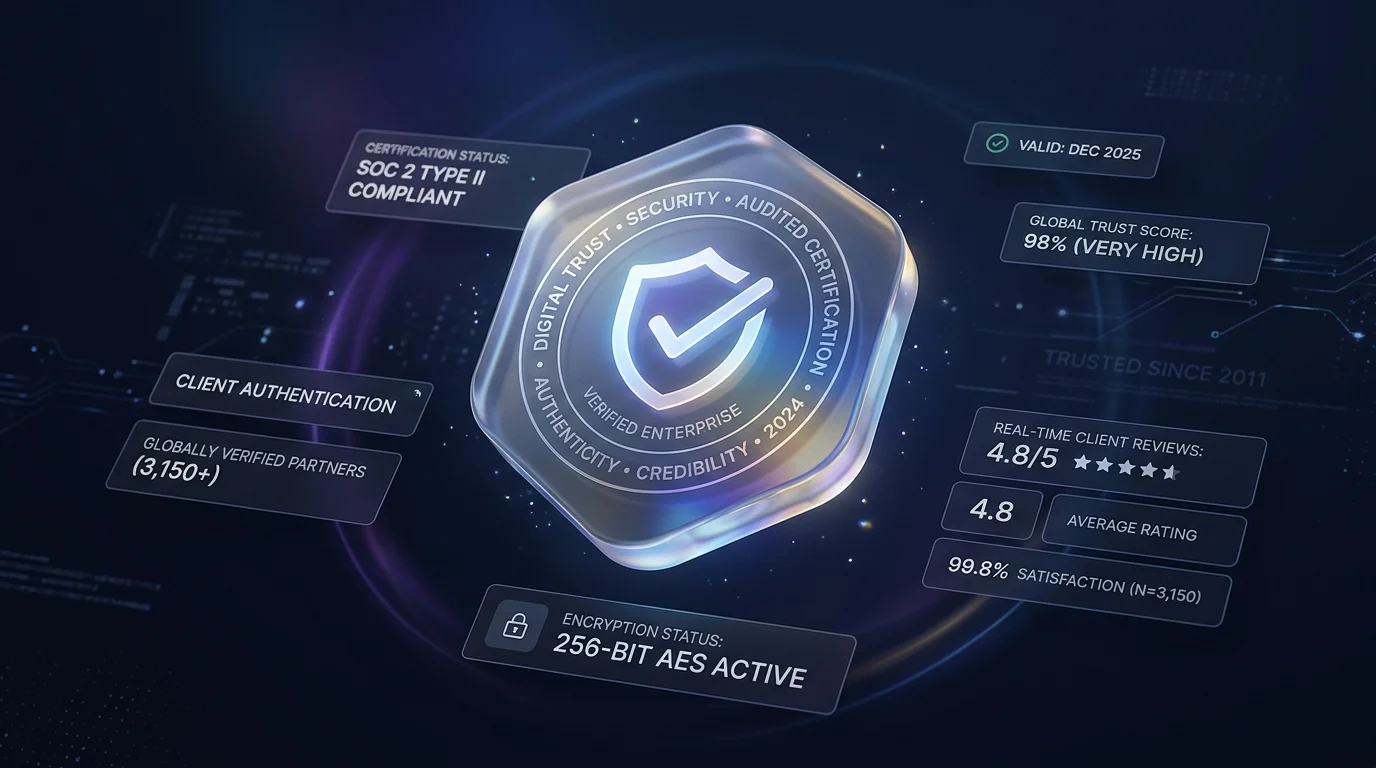
A basic SSL certificate (HTTPS) is no longer a competitive advantage; it is the absolute minimum requirement for web operation. Modern web browsers (including Google Chrome, Apple Safari, and Mozilla Firefox) actively penalize and flag unencrypted sites with prominent "Not Secure" warning banners that drive away traffic immediately.
Beyond the padlock icon, sophisticated buyers inspect how their data is handled. Ensure your forms feature clear data-handling notices, your privacy policy explains how data is protected, and your server headers use modern security practices (HSTS, Content Security Policy, and Secure Cookie flags) that prevent cross-site scripting and unauthorized data interception.
5. A Transparent, Human-Centered About Page
Analytics reports across B2B service websites consistently reveal that the About page is among the top four most visited pages prior to form submission. Prospective clients visit this page specifically to answer: "Who am I actually doing business with?"
An effective About page should feature authentic photography of your leadership team and core personnel, direct links to verified professional LinkedIn profiles, a clear narrative detailing company founding and milestones, and an unambiguous explanation of your operating philosophy. When visitors see real people standing behind the brand, perceived business risk drops dramatically.
6. Clear, Accessible Legal and Operational Policies
A complete absence of legal documentation signals an amateur or fly-by-night operation. Ensure your website footer contains accessible, clearly drafted links to:
- Privacy Policy: Detailing what user data is collected, how it is processed, and third-party tools utilized.
- Terms of Service / Terms of Business: Outlining contract parameters, service scopes, and dispute mechanisms.
- Refund, Cancellation, or Scope Revision Policies: Clearly setting expectations on how commercial disagreements are managed.
Transparent legal pages demonstrate that your organization operates under formal governance and respects commercial regulations.
7. Error-Free Technical Experience and Page Stability
Every technical bug is a subconscious credibility penalty. If a link returns a 404 error, an image fails to load, a form dropdown misbehaves on mobile devices, or page layouts shift unpredictably during reading, visitors intuitively assume your operational service will suffer from the same lack of quality control.
Maintaining high technical standards through fast server response times, responsive mobile viewports, and clean code validates your attention to detail. Investing in strategic conversion-focused website design ensures your digital touchpoints reflect institutional excellence.
8. Transparent Pricing and Engagement Expectations
One of the largest drivers of visitor hesitation is fear of hidden costs or predatory sales calls. While bespoke enterprise services cannot always publish fixed prices, you can still establish commercial trust by outlining:
- Typical project starting thresholds or baseline engagement minimums.
- The factors that dictate project scope and cost variations.
- The step-by-step onboarding process (e.g., "1. Discovery Call → 2. Technical Audit → 3. Proposal → 4. Kickoff").
When buyers understand what will happen next and how your commercial engagement works, their anxiety about reaching out disappears.
9. Recognized Industry Certifications and Technology Partnerships
If your team holds verified technical credentials, official partner certifications, or memberships in recognized professional trade bodies, display these badges prominently on relevant service pages. Official certifications from platforms like Google, Microsoft, or specialized technology vendors provide objective, external validation of technical competency.
Crucially, never invent credentials or use unearned partner logos. Savvy buyers frequently verify certifications directly in partner directories. Legitimate, earned credentials reinforce your positioning; deceptive badges permanently destroy credibility when uncovered.
Website Trust Signals Comparison: Cosmetic vs. Structural
To help leadership evaluate their digital properties, this comparison matrix distinguishes superficial visual touches from genuine credibility architecture:
| Area of Evaluation | Superficial / Cosmetic Approach | Structural Trust Approach |
|---|---|---|
| Team Presentation | Uncredited stock images of models wearing suits in generic offices. | Real photographs of key leadership and team members with verifiable LinkedIn links. |
| Client Reviews | Anonymous blockquotes with first names only ("Great results!" - Mark). | Verifiable customer quotes with full names, company titles, logos, and third-party platform badges. |
| Company Identity | A simple contact form with an @gmail.com address and no physical office location. | Complete registered business address, direct corporate emails, local telephone line, and company registration details. |
| Project Work | Generic mockups on laptops without client names, context, or measurable metrics. | In-depth case studies explaining the baseline business problem, chosen strategy, and verified outcomes. |
| Security & Legal | A self-signed SSL certificate with boilerplate, unedited privacy templates copied from the web. | Full HTTPS compliance, modern browser security headers, and customized legal policies reflecting actual data practices. |
How to Audit Your Website's Trust Architecture
Conducting an objective credibility audit requires stepping outside your internal perspective and evaluating your site as a cautious, skeptical first-time visitor. Follow this practical four-step process:
- Conduct a Mobile Friction Sweep: Open your website on a smartphone using an incognito window. Can a visitor locate your phone number, physical address, and leadership identity within two taps? Does your inquiry form function without layout issues? Resolving mobile barriers is critical to fixing common website experience problems that cost businesses customers.
- Verify External Link Parity: Check every external social media icon, partner badge, and review link. Do they link directly to active, verified profiles, or do they lead to inactive placeholders?
- Gather Blind Third-Party Feedback: Ask someone completely unfamiliar with your company to spend two minutes on your website and answer three questions: "Where is this company located?", "Who runs it?", and "Why should you trust them over a competitor?" If they hesitate, your trust architecture needs refinement.
- Audit Your Conversion Pathways: Inspect what happens immediately after a user submits an inquiry. Do they receive an immediate, professional confirmation screen outlining clear next steps, or does the page refresh ambiguously?
Frequently Asked Questions (AEO)
What are website trust signals?
Website trust signals are visual, technical, and informational elements that demonstrate a company's legitimacy, security, and competence to prospective clients. They include verified physical contact details, SSL encryption, customer testimonials, detailed case studies, clear legal policies, and professional accreditations designed to lower buyer hesitation and validate business credibility.
Can a visually appealing website still suffer from low customer trust?
Yes. A website can feature modern typography, polished color palettes, and clean layouts while still failing to establish trust. If the site lacks verifiable company details, conceals leadership identities, relies on unverified testimonials, or presents vague pricing and scope definitions, cautious buyers will hesitate to submit personal inquiries regardless of how attractive the site looks.
Do security badges and SSL certificates increase website conversions?
Security measures like SSL certificates (HTTPS) and security badges protect user data and eliminate browser security warnings that actively drive traffic away. However, while essential for establishing a baseline of technical safety, security signals alone do not guarantee conversions. They must be paired with operational trust cues, such as client proof, transparent communication, and clear value propositions.
How should small businesses display social proof without big-brand clients?
Small businesses do not need Fortune 500 client logos to establish credibility. Authentic, highly specific testimonials from local business owners or niche clients are far more persuasive than generic quotes. Highlight detailed problem-and-solution stories, share verified Google Business Profile reviews, and document before-and-after project milestones that demonstrate genuine problem-solving capability.
What is the most common trust mistake on commercial websites?
The most common trust mistake is corporate anonymity. Many businesses build websites that read like faceless conglomerates, featuring stock imagery, generic contact forms, and no identifiable leadership or physical address. Replacing stock assets with authentic team photography, real office details, and direct contact channels immediately elevates perceived credibility.
Build Credibility and Confidence With Digitons Development
Your website is often the first and most critical commercial interaction a prospective customer has with your business. If your digital touchpoints trigger doubt, skepticism, or hesitation, marketing investments fail to deliver their full potential.
At Digitons Development, we engineer high-performance digital solutions that combine refined visual design with rigorous technical and credibility architecture. We help organizations build digital experiences that turn skeptical visitors into loyal clients.
Explore our strategic website design capabilities, discover our bespoke custom web development services, or contact our digital strategy team today to audit and strengthen your digital credibility.
Ready to turn these ideas into results?
Let's discuss how tailored digital marketing, custom web engineering, and targeted SEO can accelerate your business goals.