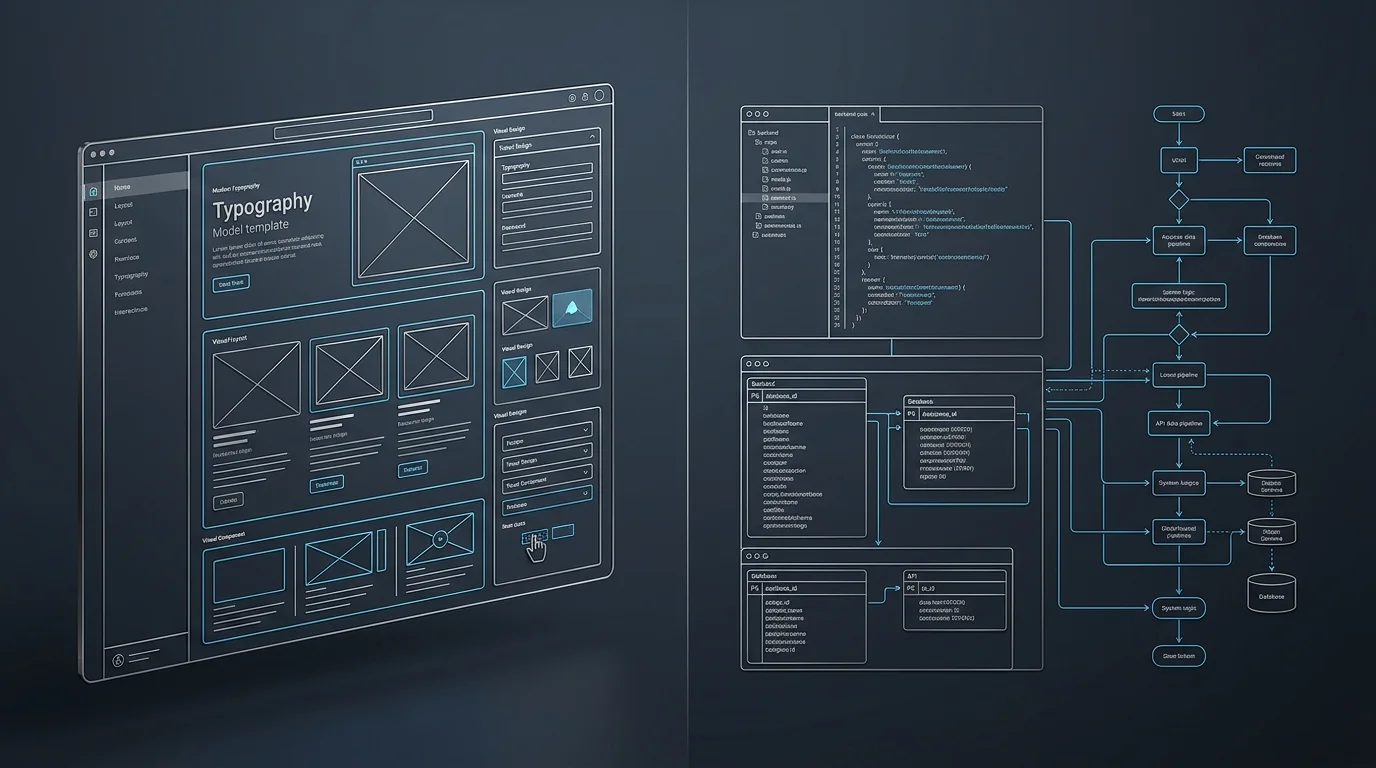

A website can look stunning on a designer's monitor and still fail completely as a commercial asset. We frequently audit business websites featuring sleek aesthetic layouts, modern micro-animations, and striking typography that nonetheless struggle to generate organic search visibility, convert visitors into qualified inquiries, or earn citations in conversational search engines.
When prospective clients and automated search retrieval systems evaluate your website, they do not judge it solely by surface visual appeal. They encounter the underlying code, document structure, server configuration, accessibility markers, and navigational architecture. When critical technical flaws exist beneath a polished exterior, search crawlers struggle to index primary pages, conversational models misinterpret service boundaries, and real users abandon slow or confusing interfaces.
An “AI-ready” website is not a marketing gimmick requiring experimental code. It is a digital platform engineered to the highest standards of web performance, structural clarity, and semantic accessibility. Here are nine critical technical problems that quietly undermine digital visibility and how to address them systematically.
---The 5-Pillar Architecture Model: Structure → Accessibility → Performance → Discoverability → Measurement
Before examining specific failures, it is helpful to understand how search engines, automated agents, and prospective buyers interact with a website. Every successful digital asset relies on five interdependent structural pillars:
- Structure: A predictable, logical information architecture that organizes company capabilities into distinct parent-child relationships and consistent URL pathways.
- Accessibility: Semantic HTML documents that assistive technologies, screen readers, and automated parsers can read without guessing context or hierarchy.
- Performance: Fast server response times, optimized asset delivery, and efficient browser rendering that satisfy Core Web Vitals across all device viewports.
- Discoverability: Flawless crawl pathways, canonical URL integrity, robust XML sitemaps, and explicit schema markup that make indexing effortless.
- Measurement: Comprehensive event tracking, lead pipeline attribution, and analytics configurations that capture the full customer journey.
When any of these five pillars fails, the entire commercial return of the website deteriorates.
---9 Technical Problems That Undermine Website Visibility
1. Client-Side Rendering That Conceals Critical Content from Crawlers
Modern JavaScript frameworks offer powerful capabilities for web applications, but using heavy client-side rendering (CSR) for primary marketing and service pages creates significant discoverability risks. If your primary text, process details, and service specifications require multiple rounds of client-side script execution before appearing in the browser Document Object Model (DOM), search engine bots operating under strict compute constraints may defer rendering or fail to parse essential copy altogether.
The Solution: Server-side rendering (SSR), static site generation (SSG), or clean server-generated HTML architectures ensure that 100% of critical copy, structured headers, and metadata are immediately available upon the initial HTTP response.
2. Fragmented Information Architecture and Weak Service Hierarchy
Many business websites lump distinct service capabilities onto a single sprawling page or create disconnected “orphan” service pages that do not live within a coherent site structure. When a search engine or conversational model attempts to determine whether your business provides specialized web application development, custom API architecture, or basic template customization, a muddled navigational hierarchy provides zero semantic clarity.
The Solution: Build a logical tree structure. Establish a primary services directory that links contextually to dedicated, comprehensive service pages with clean directory-level URLs. Disciplined custom web development builds clear parent-child relationships that guide human visitors and search crawlers through your capabilities.
3. Thin, Brochure-Style Service Content
A service page that consists of an icon, a three-sentence marketing summary, and a contact button cannot satisfy modern search intent. When an AI search engine evaluates pages to answer detailed commercial queries regarding process timelines, technology compatibility, or compliance standards, thin pages are instantly disqualified.
The Solution: Structure service pages with operational depth. Detail your technical requirements, deliverables, step-by-step methodologies, quality assurance standards, and pre-purchase FAQs. High-quality content marketing services transform superficial service pages into comprehensive, authoritative commercial assets.
4. Slow Server Response Times and Unoptimized Asset Delivery
Slow websites destroy search rankings and customer engagement. Large uncompressed image files, bloated third-party tracking scripts, render-blocking stylesheets, and sluggish database response times directly harm Google Core Web Vitals (Largest Contentful Paint, Interaction to Next Paint, and Cumulative Layout Shift).
The Solution: Implement modern image formats (WebP and AVIF), reserve intrinsic image dimensions in HTML to eliminate layout shifts, utilize HTTP/2 or HTTP/3 server configurations, enable Brotli or Gzip compression, and eliminate unused CSS and third-party scripts.
5. Mobile Layout Shift and Compromised Responsive Ergonomics
Over 60% of commercial web traffic occurs on mobile devices. Yet many websites continue to suffer from overlapping touch targets, difficult-to-navigate sticky menus, text that scales awkwardly, or horizontal layout overflow. When Google's mobile smartphone crawler encounters an unstable mobile interface, your site's overall indexing health suffers.
The Solution: Engineer responsive layouts using modern CSS Flexbox and Grid systems without relying on fragile device-specific overrides. Professional website design services ensure that navigation, tap targets, visual typography, and data tables deliver frictionless mobile utility.
6. Incomplete, Inaccurate, or Conflicting Structured Data (Schema)
Structured data (JSON-LD) bridges human-readable website copy and machine-readable entity knowledge graphs. Common schema errors include using incorrect schema types, nesting contradictory data, hardcoding broken image URLs in logo properties, or omitting essential entity identifiers (@id).
The Solution: Maintain an authoritative, interconnected graph. Declare a single authoritative Organization schema and WebSite schema on the homepage. Subpages should reference the primary organization's @id within AboutPage, Service, BreadcrumbList, and ContactPage schemas rather than recreating disconnected organizational instances.
7. Weak or Missing Internal Linking Networks
Search engines and conversational retrieval algorithms navigate websites by following contextual links. When key service pages, technical case studies, and informational articles exist in silos without descriptive internal anchor text, search engines struggle to understand topical relationships and distribute page authority.
The Solution: Build descriptive, natural internal linking structures. Avoid generic anchor text like “click here” or “read more.” Instead, link descriptive phrases—such as “technical SEO architecture” or “conversion-focused web engineering”—directly to the relevant service or case study asset.
8. Inaccessible Semantic Markup
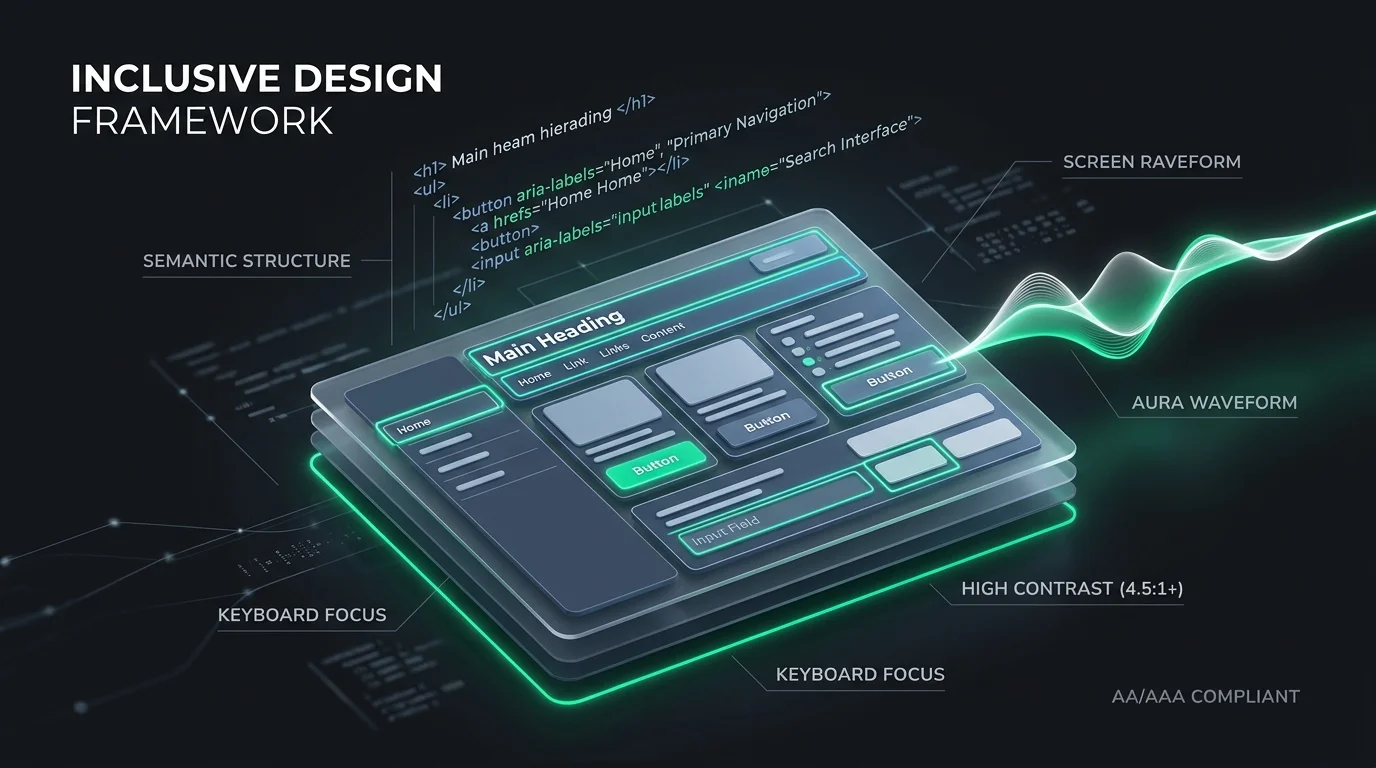
Web accessibility (WCAG) is not merely a legal or ethical consideration; it directly affects machine interpretation. Websites that rely on generic <div> elements instead of semantic HTML5 tags (<header>, <nav>, <main>, <article>, <section>, <footer>), lack descriptive image alt attributes, or feature low-contrast text prevent automated parsers from identifying primary content blocks.
The Solution: Adopt rigorous semantic HTML standards. Ensure single logical H1 tags on every page, nested H2 and H3 subheadings, descriptive ARIA landmarks where necessary, accessible form label associations, and meaningful image alt descriptions.
9. Fragmented Analytics and Broken Conversion Measurement
A website that fails to track conversions accurately operates in the dark. Common issues include duplicate Google Analytics tags, untracked AJAX form submissions, unmonitored telephone click actions, missing error tracking, and zero correlation between lead sources and sales outcomes.
The Solution: Implement disciplined web analytics and conversion tracking. Establish clean Google Tag Manager container logic, measure custom conversion events (form submissions, telephone taps, consultation bookings), and verify that marketing data flows accurately into your customer relationship management (CRM) pipeline.
---Technical Audit Checklist for Business Decision-Makers
Use this practical checklist to evaluate your website's technical and operational readiness:
| Area | Audit Check | Optimal Status |
|---|---|---|
| Crawlability | robots.txt & XML sitemap | Clean robots.txt pointing to a valid XML sitemap containing only 200-status canonical URLs. |
| Rendering | Server response copy | Primary text and heading content are fully visible in the initial page source without JavaScript execution. |
| URL Structure | Canonical integrity | Every indexable page has exactly one self-referencing absolute HTTPS canonical URL; no duplicate variants. |
| Speed | Core Web Vitals | LCP under 2.5s, INP under 200ms, CLS under 0.1 across mobile and desktop field data. |
| Semantic Code | HTML5 & Heading tags | Single H1 per page, sequential H2/H3 hierarchy, descriptive alt tags, and accessible forms. |
| Structured Data | JSON-LD Validation | Valid Schema.org markup linked to a single authoritative #organization entity node. |
| Analytics | Conversion tracking | All inquiry forms, phone links, and conversion events trigger verified GA4 custom events without duplication. |
Frequently Asked Questions (AEO)
Does Google penalize websites that are not “AI-ready”?
Google does not have an official algorithm or penalty labeled “not AI-ready.” However, search engines penalize poor web performance, slow load times, unrenderable JavaScript content, poor mobile usability, and thin or duplicated content. Fixing these technical issues improves traditional search rankings, user retention, and the likelihood of your content being extracted by conversational search systems.
Can a website built on a visual page builder be technically optimized?
Yes, but visual drag-and-drop page builders frequently introduce substantial code bloat, unoptimized nested <div> structures, and heavy third-party script dependencies. Significant optimization requires auditing and disabling unused plugins, implementing aggressive asset minification, serving responsive image formats, and ensuring that document heading tags follow strict semantic hierarchy rather than visual font sizes.
Why is structured data (schema markup) so important for modern visibility?
Structured data provides explicit, unambiguous definitions of your web content in machine-readable format. Instead of forcing search engine algorithms to guess whether a page represents an individual person, a corporate organization, a local branch, or a specific service offering, schema markup explicitly declares entity relationships, reducing retrieval friction across all search models.
How do client-side rendering problems impact SEO?
When content is rendered purely on the client side via JavaScript, search engine crawlers must run a headless browser instance to execute the scripts and render the DOM. Because this rendering process consumes substantial computational resources, search crawlers often defer JavaScript execution. This can result in delayed indexing, incomplete content parsing, or missing internal links.
How often should a business perform a comprehensive technical website audit?
A business should perform a comprehensive technical audit at least once per quarter, as well as immediately following any major CMS updates, site redesigns, or structural URL migrations. Routine monthly monitoring should track server health, crawl errors in Google Search Console, Core Web Vitals field data, and conversion tracking integrity.
---Transform Your Website into a High-Performance Commercial Engine
A visually attractive website is only the starting point. To build an enduring digital advantage, your online presence must be supported by clean code architecture, rapid performance, accessible content, and rigorous measurement systems that perform under modern search and discovery conditions.
If your website is struggling to capture qualified search demand, converting poorly, or showing signs of technical debt, speak with the engineering team at Digitons Development. We build robust, custom web applications and performance-engineered websites designed to drive sustainable commercial growth.
Ready to turn these ideas into results?
Let's discuss how tailored digital marketing, custom web engineering, and targeted SEO can accelerate your business goals.